This is a question I get asked a lot: How do you contain the horses in the backcountry, especially overnight?
There are several ways that can work depending on where you are and what works for you and your stock. Highline, lowline, electric fence are a few. Some people keep one animal tied in camp and turn the rest loose to graze.
What’s important is that… you leave no trace (your animals aren’t digging craters or eating the bark off of trees, cleaning up camp and scattering manure when you leave is part of that too), your animals aren’t fighting and are still there in the morning, and you can get some rest without constantly worrying about what the horses/mules are doing.
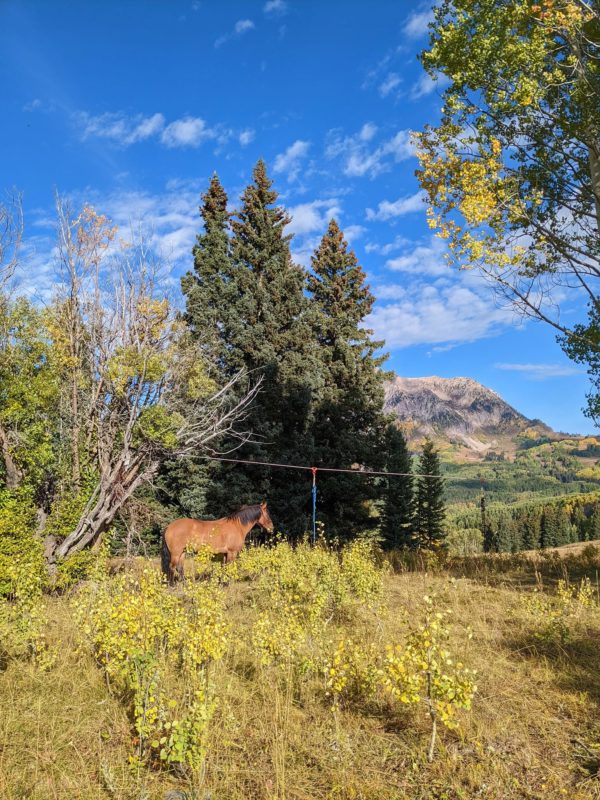
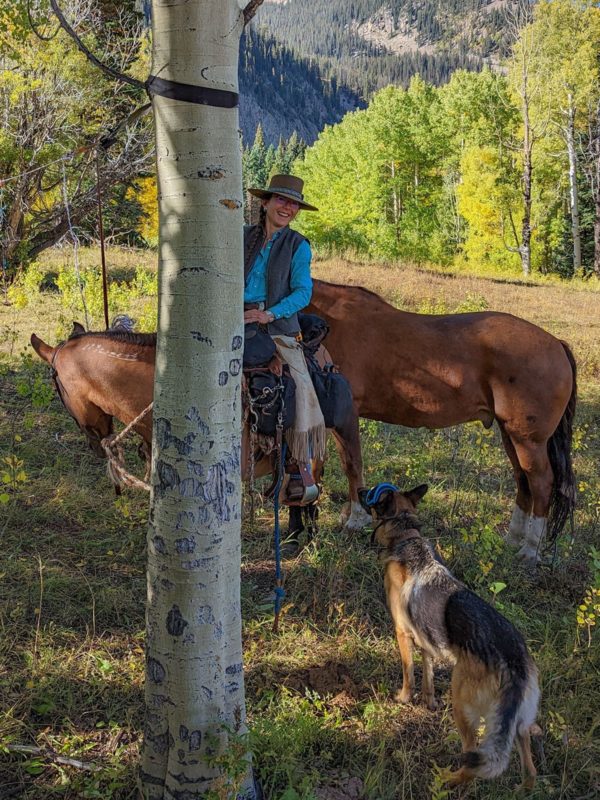
Highline works for us in most places (you need strong enough, live trees for that). Nothing wrong with setting up several highlines either, because you need to get the spacing right and not have animals tangled up in each other, in ropes or in trees.
I tend to use the “looks good” approach for measuring but if that’s not something that works for you then the 777 rule might help you (I heard that last year and I think it’s a great rule of thumb and easy to explain): Highline should be 7ft high, and animals 7ft apart, and 7ft from trees. You can tweak that based on your needs of course.
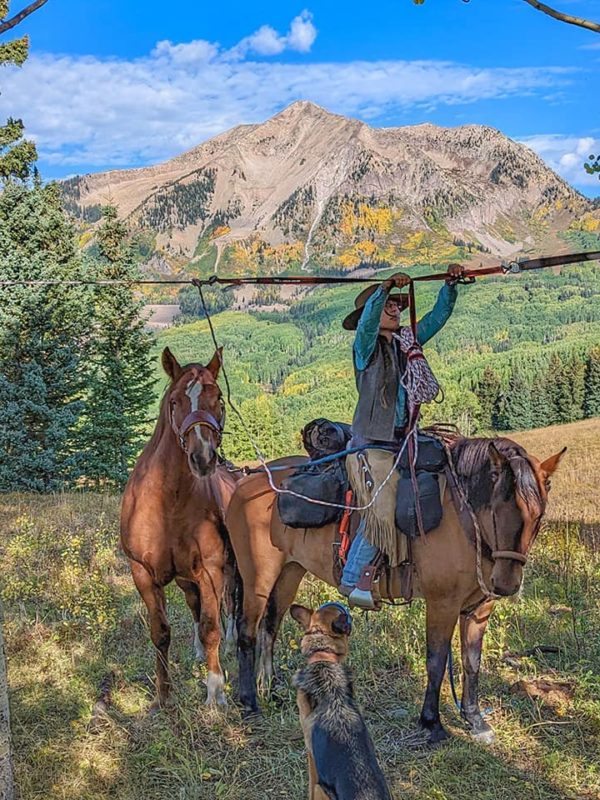
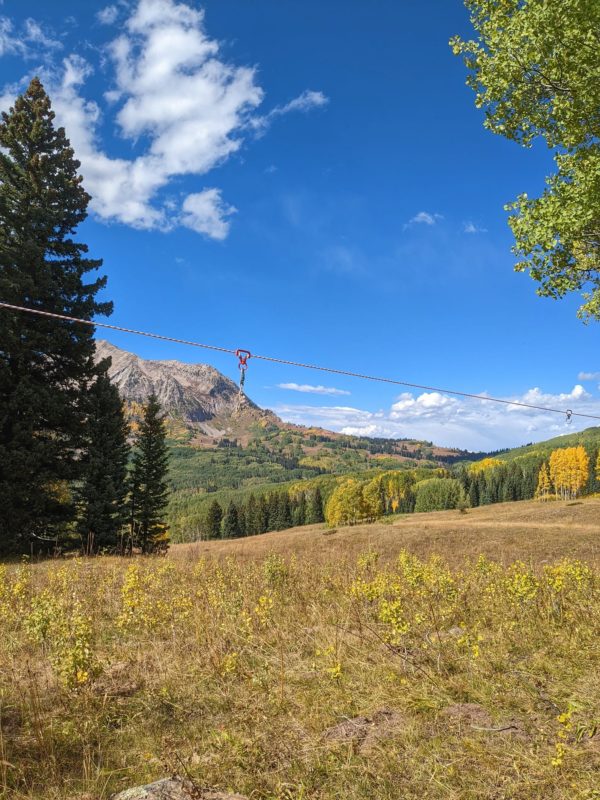
I’m going to put links to the equipment we use at the end of this post. For your animals’ safety it’s really important that the highline is tight and that there are swivels. At least one, but I prefer two. One at the highline end and one at the halter end. That way the rope turns as the horse moves and they don’t get choked by the rope that’s getting shorter as it twists (that happens without swivels and you can end up with a dead horse that way). I like to tighten the highline every day because it does get slack in it overnight. Saggy highlines can cause a horse to get its head too low and get a foot over the rope, or to get tangled in the highline if they get upset.
Rope length: I like the rope so that they can get their poll at wither level to sleep. Any longer and mine will paw, try to eat, visit each other, get tangled in the rope.
For short people and for convenience/safety: I have a piece of rope tied to a climbing carabiner that’s clipped to the highline swivel (those are nice, they are movable but so long as the line is tight won’t move on their own). I can reach that from the ground and to me it’s a better way to tie than to risk getting the rope bound up in the loop of the swivel. It can also be cut quickly if there really is a problem.
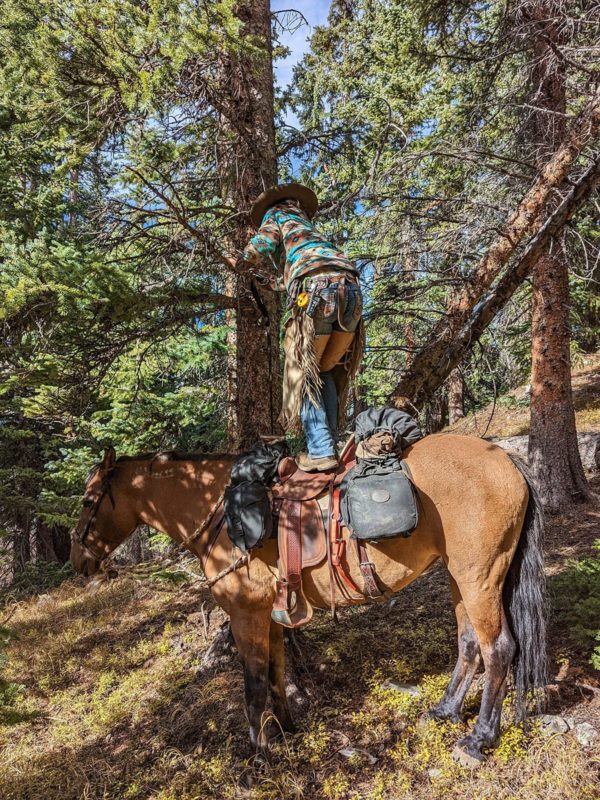
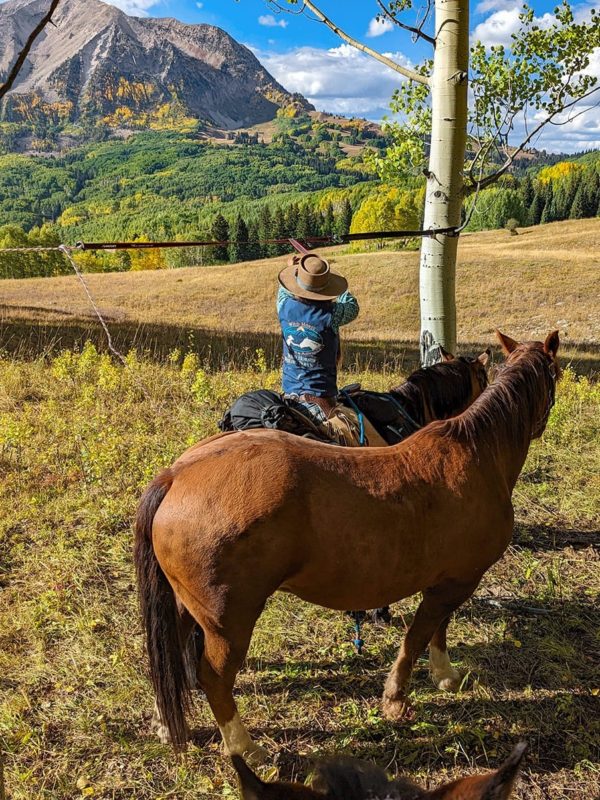
Yes, sometimes I do climb around on my horse to set up a highline. Not every horse will appreciate that. I do tighten the highline from horseback. That works well if you can keep your horse still and yourself from getting clotheslined (or would it be highlined in this case?).
For the really special horses/mules out there: Both Tiny and Lacy are hobbled at night on the highline. The hobbles are loose enough for them to be comfy, yet not so loose that they come off. Tiny is a mouthy busybody and I wouldn’t put it past him to chew through his lead rope. Lacy wiggles and paws and gets more nervous the more she does that. I put the hobbles on and she goes to sleep. Littlefoot wouldn’t paw if he had a single cuff hobble on one front foot. I couldn’t hobble him or he’d wake up and panic because he couldn’t move his feet freely. He is hobble trained. Just couldn’t be highlined in them.
Another thing to ensure happy, quiet horses: Don’t make them go to bed hungry. My guys graze until I go to bed and get taken off the highline as soon as I wake up. That way they’re more likely to be calm overnight.
For your own peace of mind and that of your animals: Put troublemakers on the end or on their own highline. Nobody needs a kicking match at 2am and a lame horse because of it.
This equipment/setup is what works for us. It’s not gospel, so if you do something different and it works for you, by all means. I’m sharing this to help those who are looking for input and who maybe (like me) don’t know 18 different knots.
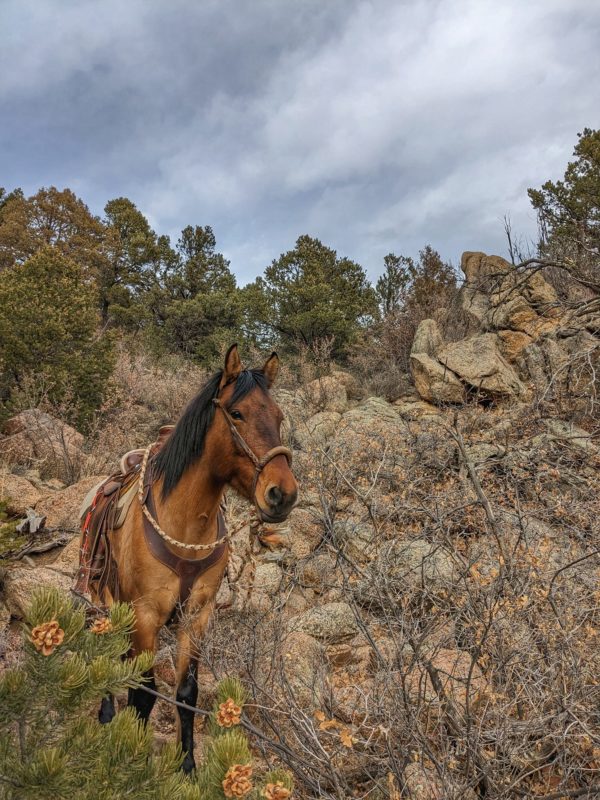
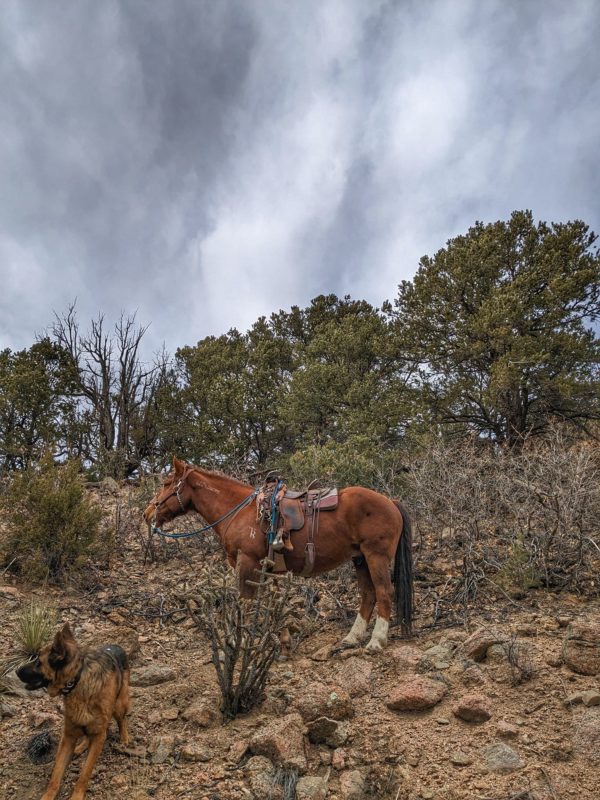
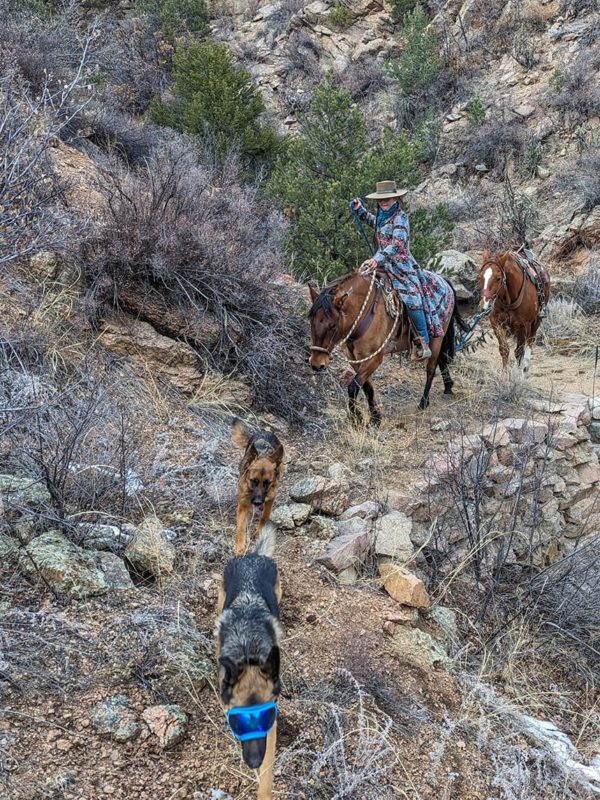
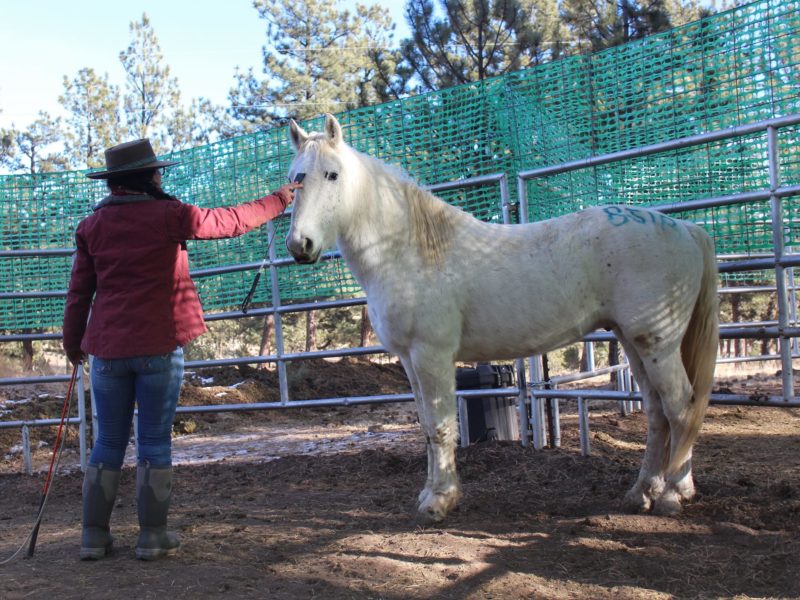
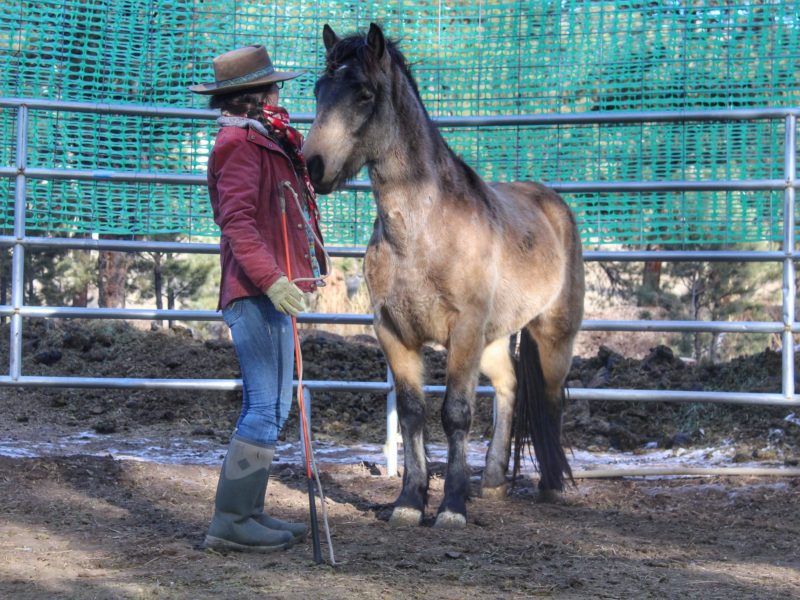
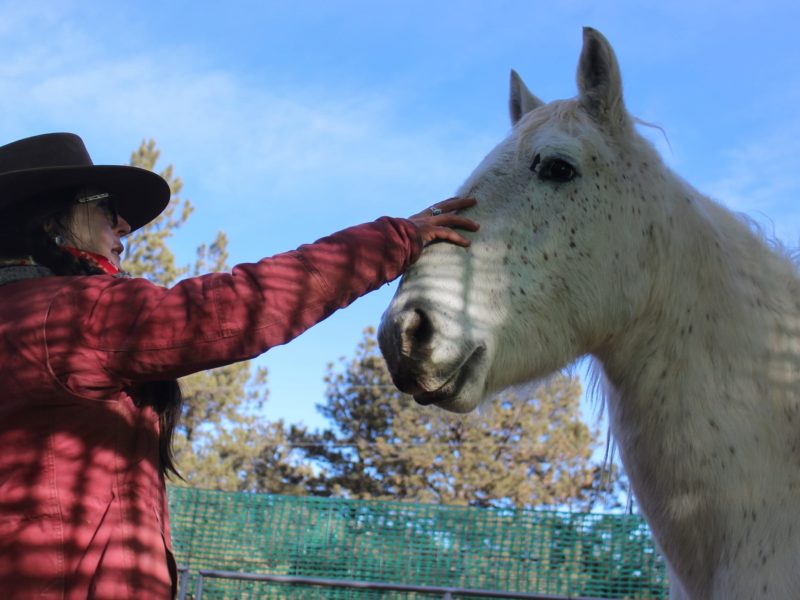
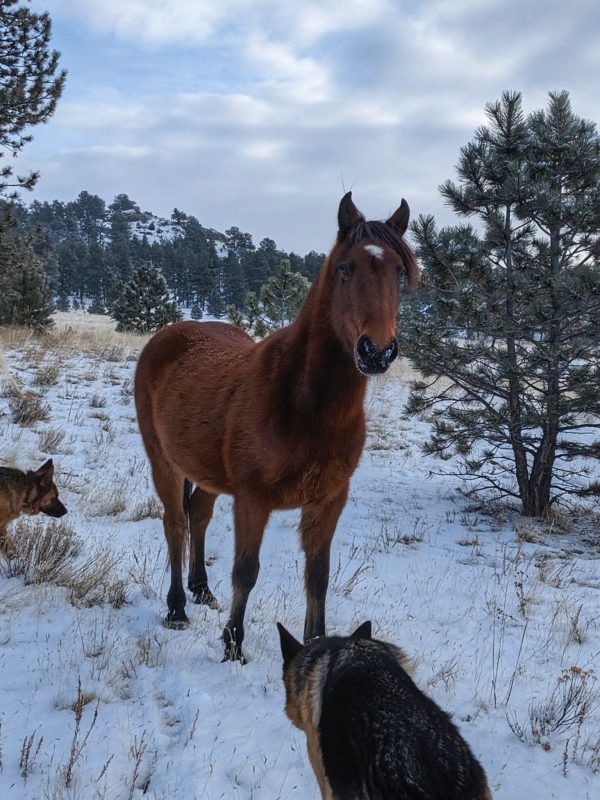
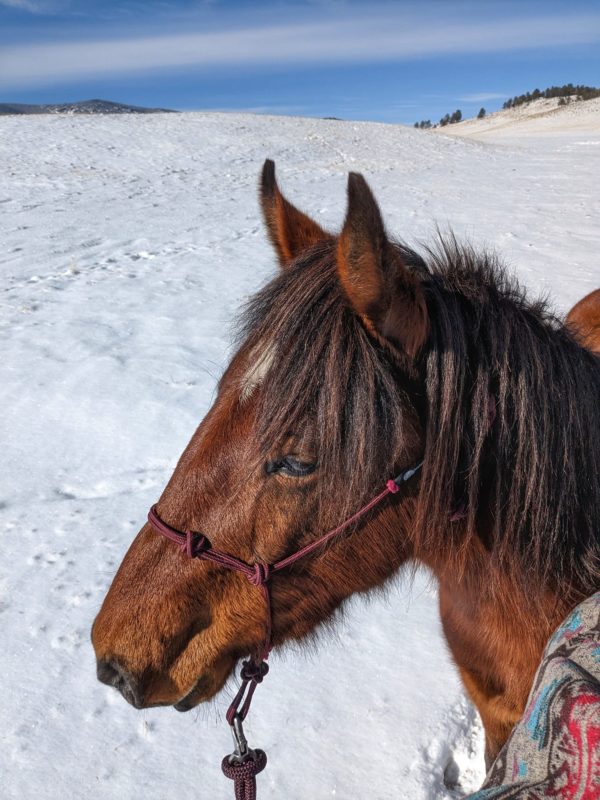
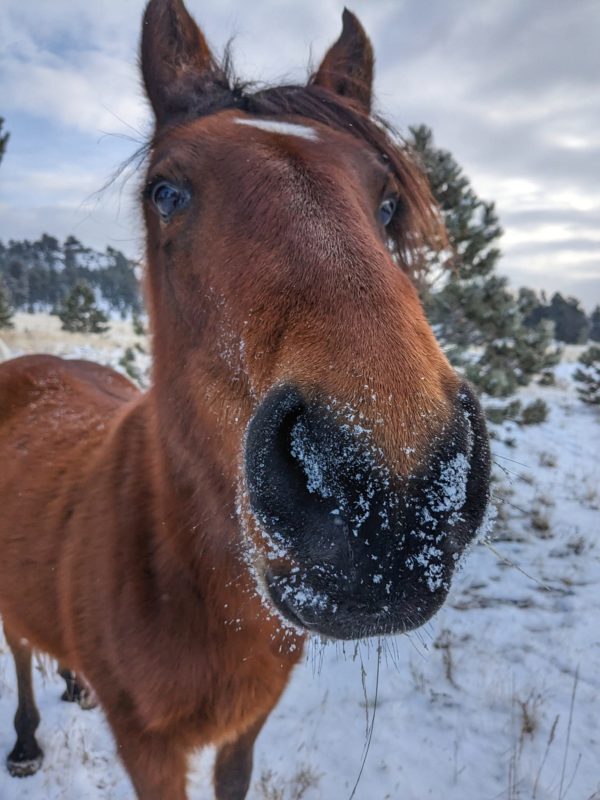
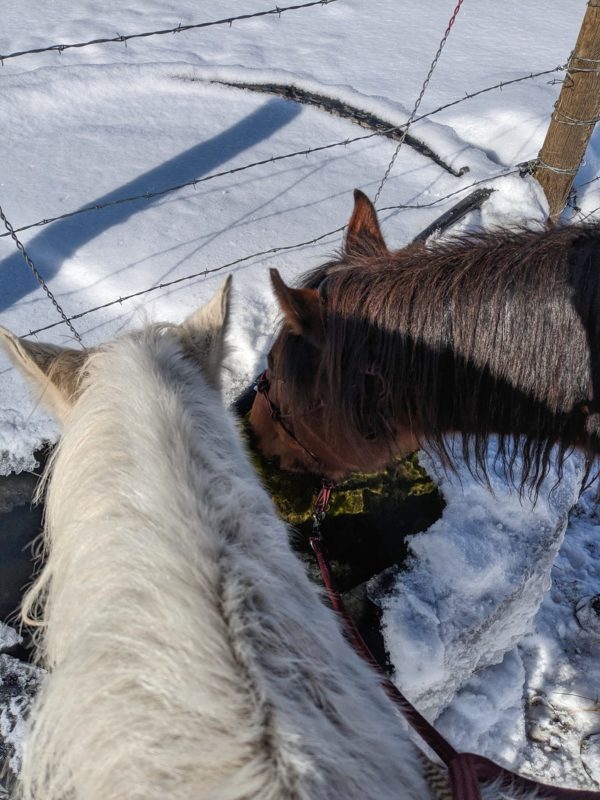
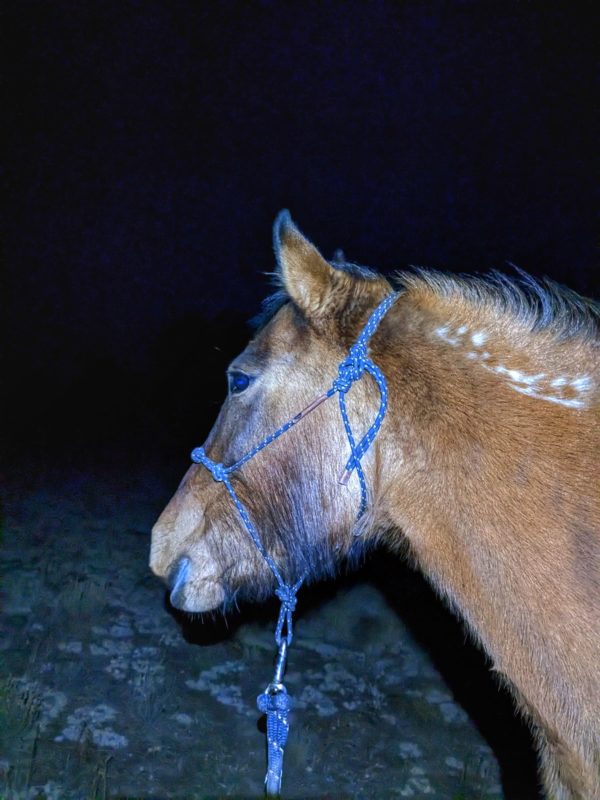
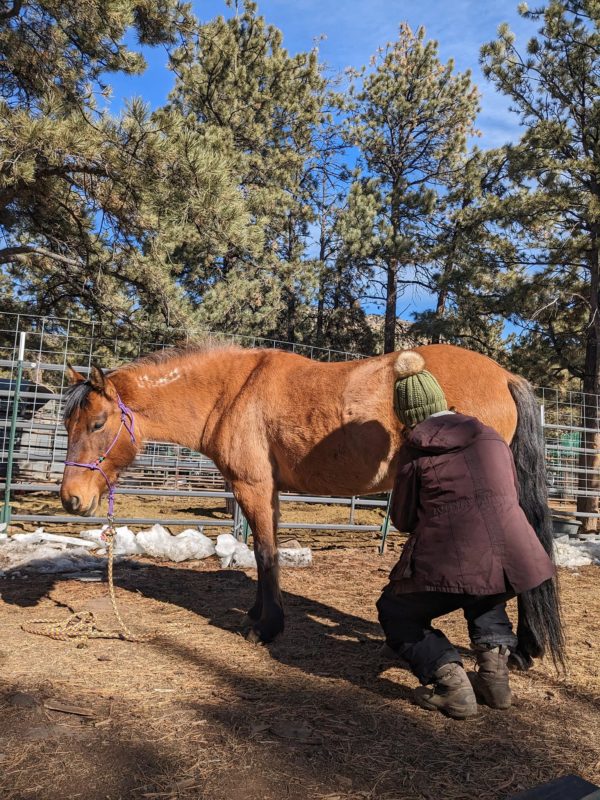
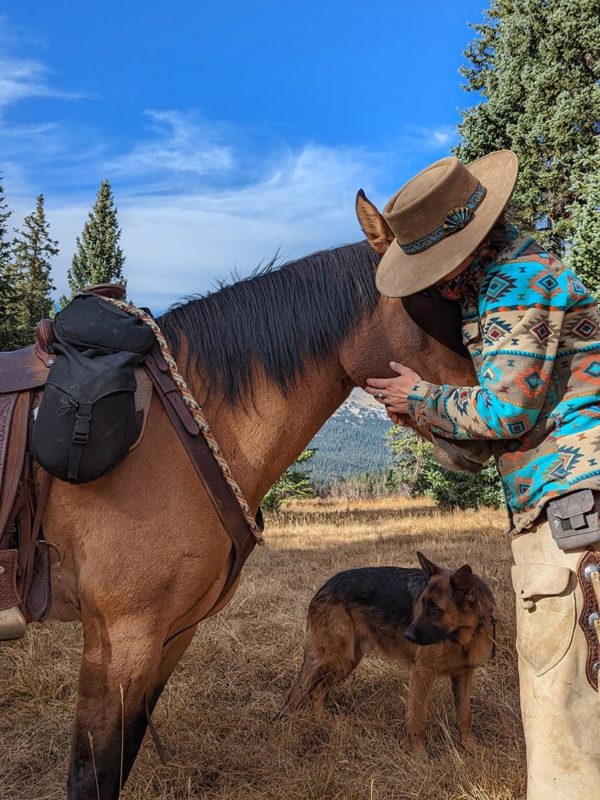
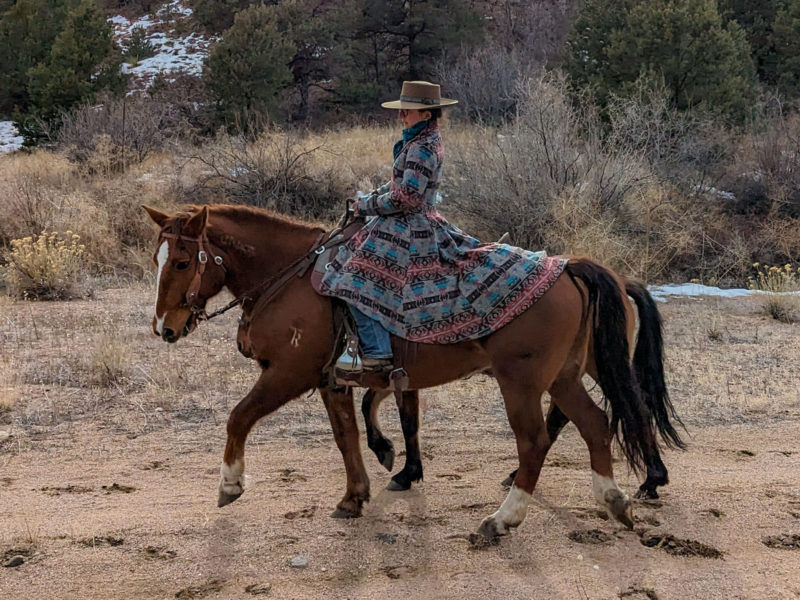
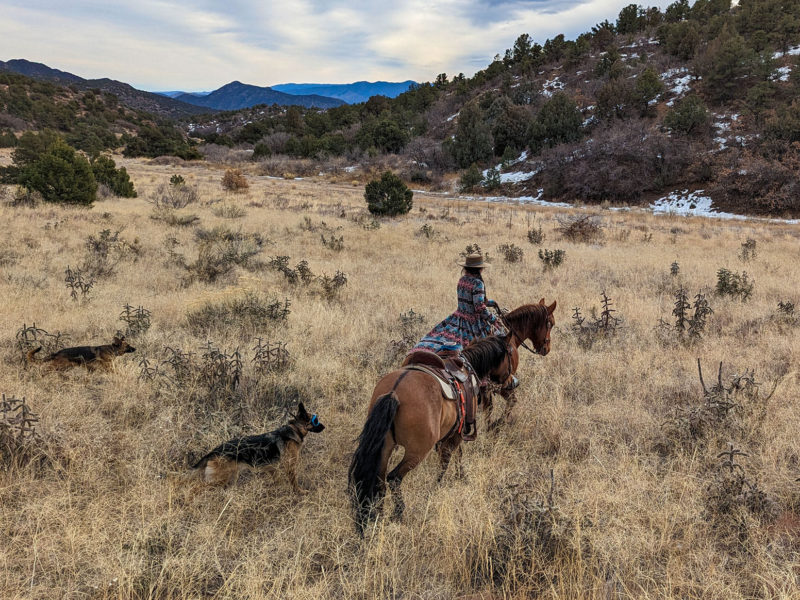
Pictured here: Wild Horse Outreach & Advocacy Ambassador Mustangs Lacy and Tiny. Denali the Shepherd wears those goggles for an eye condition per vet recommendation.
Here you go:
1″ ratchet strap, good quality. That’s a smooth way to keep you highline tight. Make sure it works right before you leave for your trip.
Tree savers so your rope doesn’t kill the trees you’re tying to (lash cinches can work too): https://www.amazon.com/gp/product/B0032CR2C2/
Highline rope (can use your lash rope too): https://www.amazon.com/gp/product/B00D2ZNZDE/
Swivels: https://www.amazon.com/gp/product/B002L99LH6/
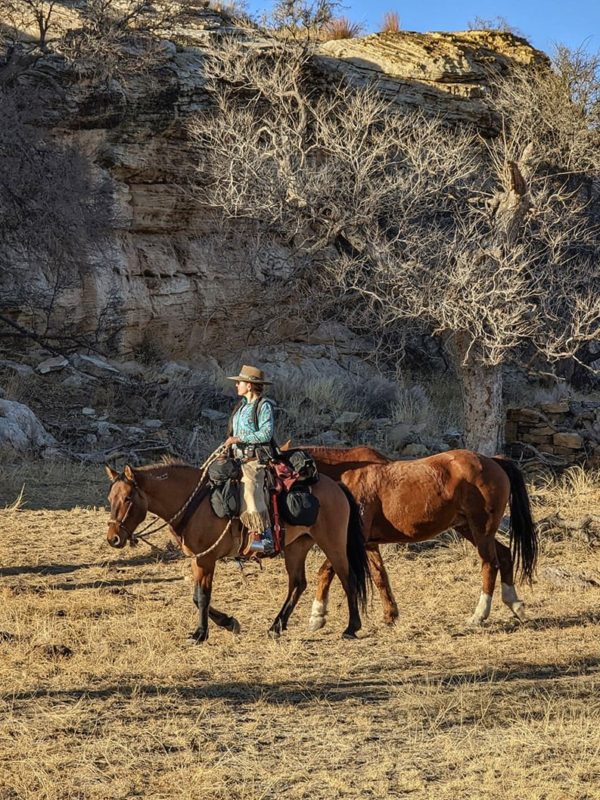
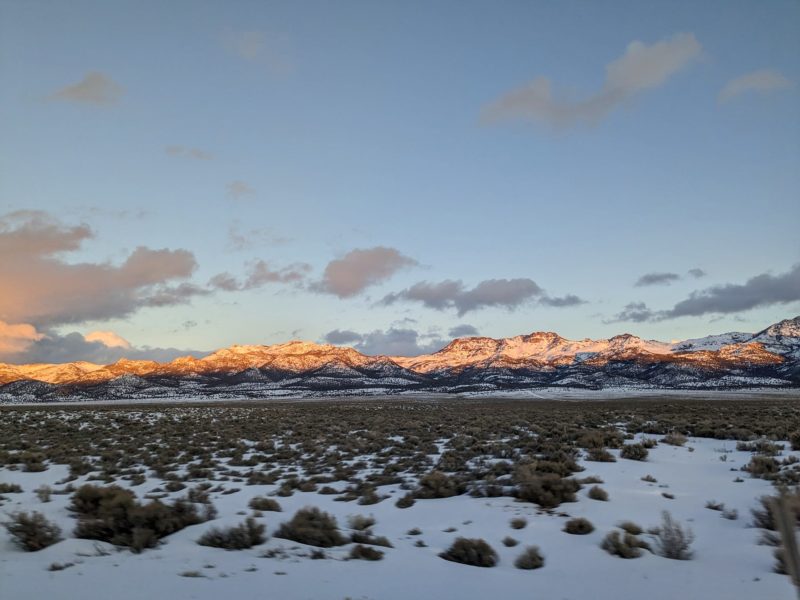
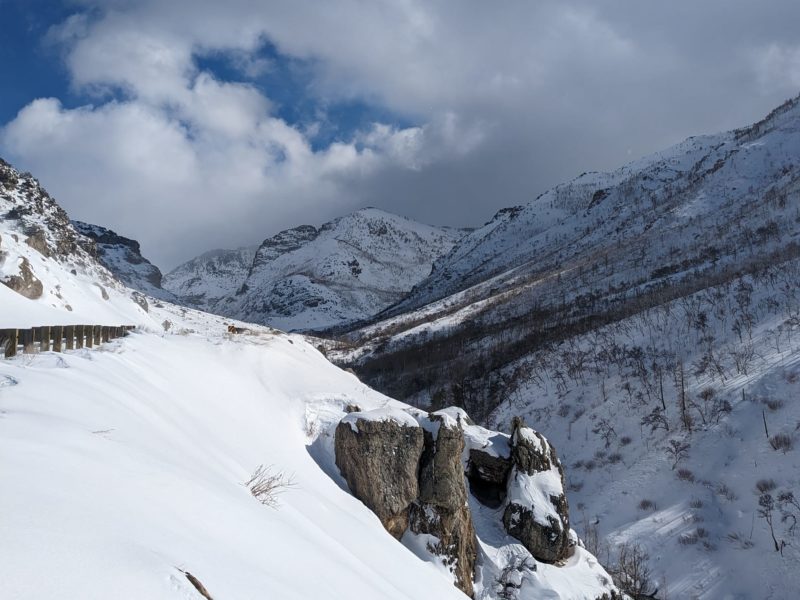

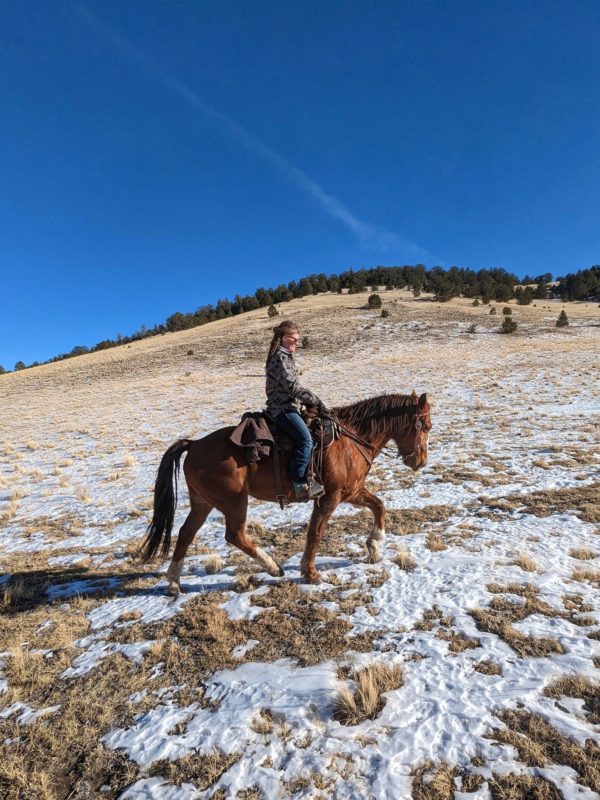
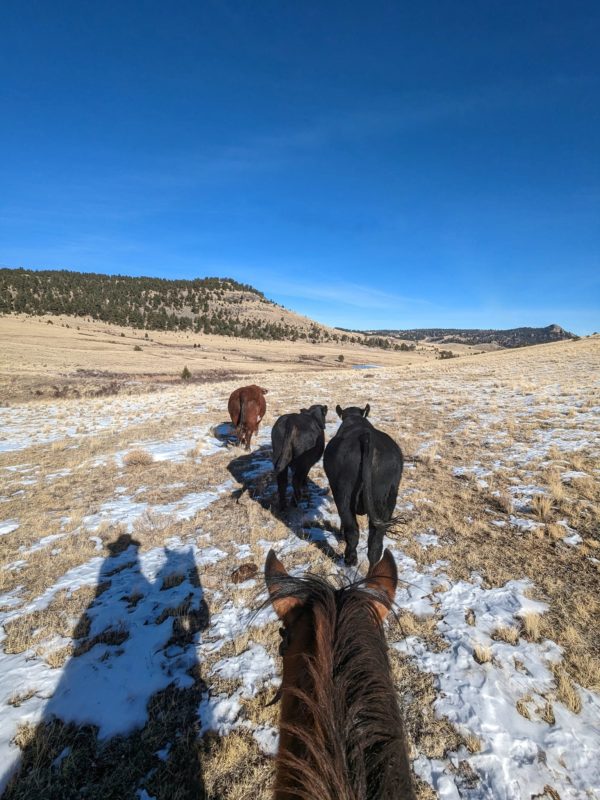



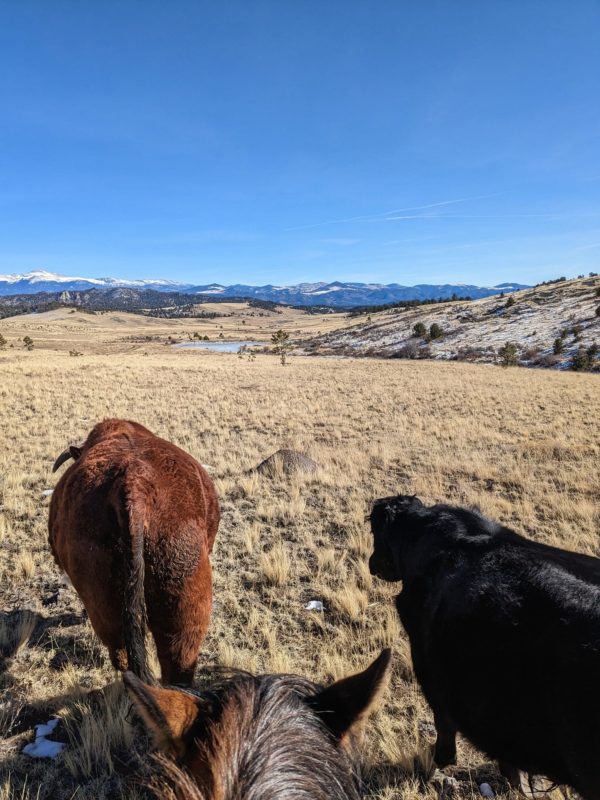
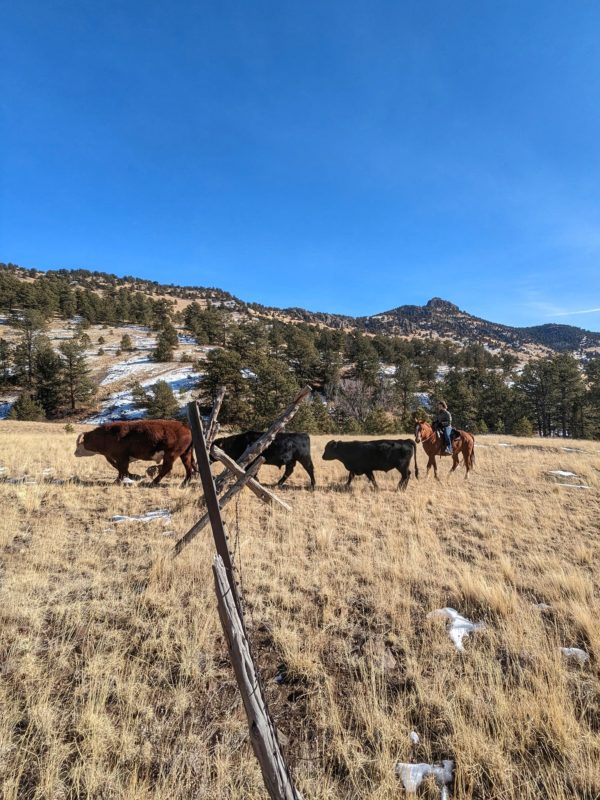
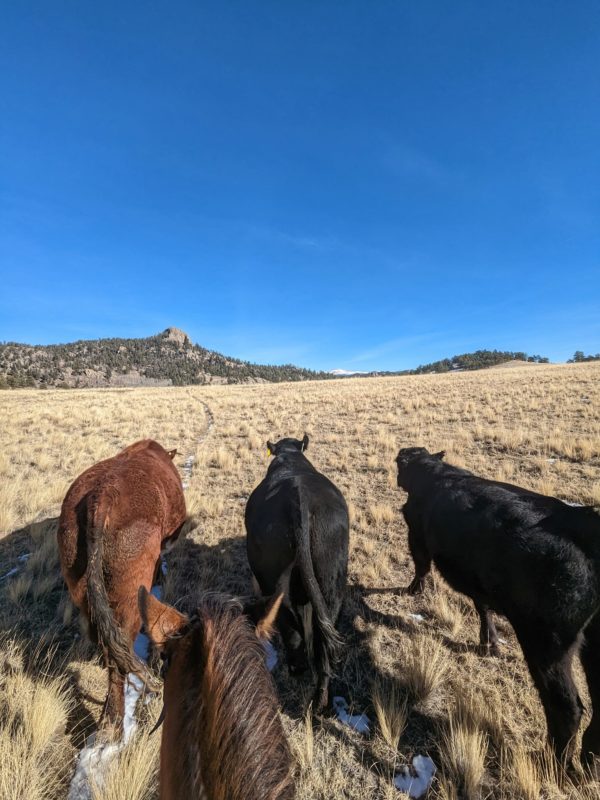
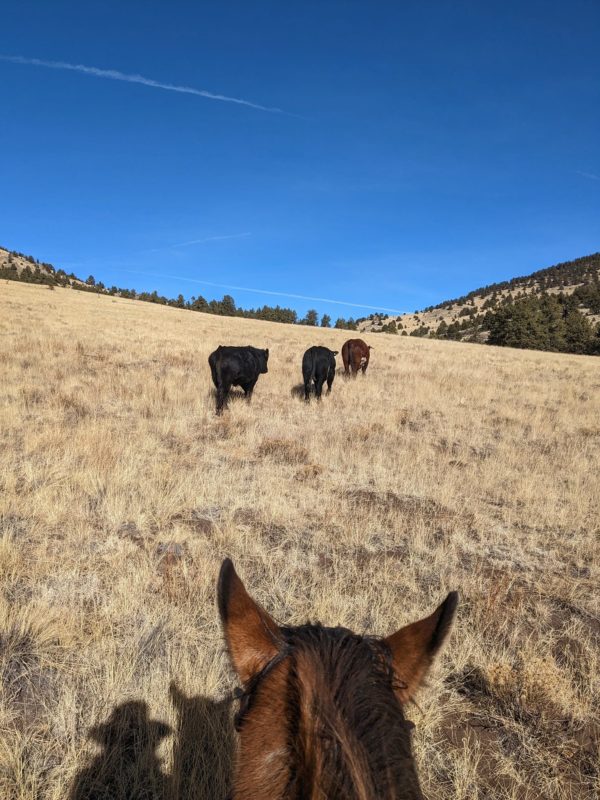
 ). I got us in a bind again by thinking that riding down a different draw on the same ridge would be just as manageable as the draw we came up, just a few hundred feet over. Turns out that was flawed logic. The final few hundred feet of our descent involved some creative problem solving and colorful language.